Hitting the Hard-to-Hit: UT Austin Team Charts New Territory in Covalent Drug Discovery
Zhihong Li, a postdoctoral fellow in the Hsu Lab at UT Austin, has spearheaded two back-to-back studies that introduce new tools for drug discovery. The work tackles a fundamental challenge in medicine: most human proteins that drive disease cannot be targeted by existing drugs because we lack the right chemical tools to interact with them precisely.
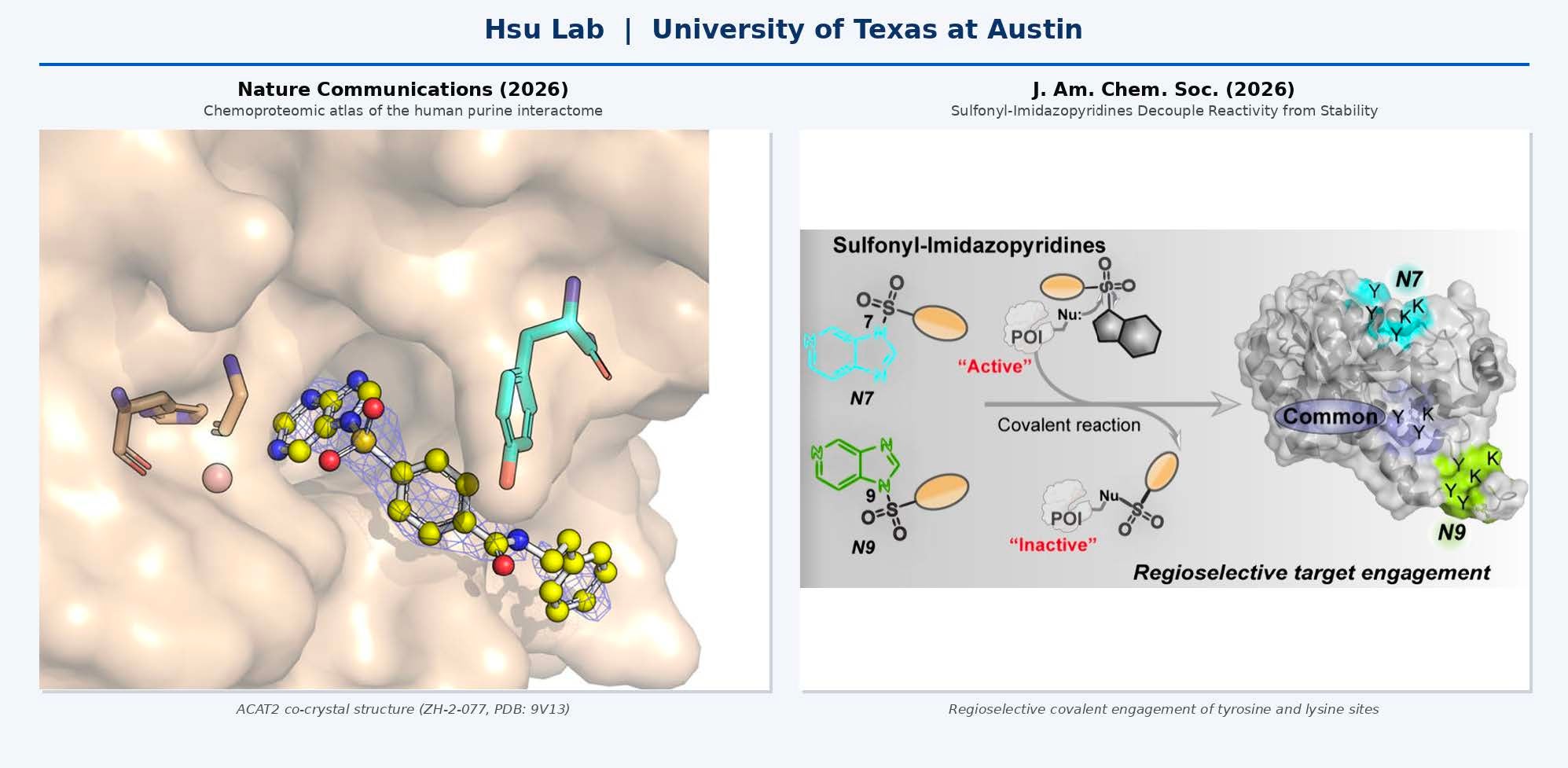
In Nature Communications, Zhihong built a comprehensive atlas of over 31,000 sites on human proteins that can be chemically engaged by a new class of molecules developed in the Hsu Lab called sulfonyl-purines (SuPUR) and used this map to discover potent inhibitors of several disease-relevant proteins, including a cancer-associated enzyme called ACAT2.
In a companion study in JACS, Zhihong showed that a simple one-atom chemical alteration to the SuPUR scaffold dramatically improves the stability of these molecules inside living cells and animals, overcoming a key barrier to developing them as therapeutics, and used the improved molecules to selectively switch off enzymes involved in cancer metabolism.
Together, the two studies establish a versatile new platform for finding drug candidates against proteins that have long been considered undruggable.