
Inorganic and Materials Chemistry Seminar - Kuo-Wei Huang
Aug
3
2026
Description
Inorganic and Materials Chemistry Seminar - Kuo-Wei Huang
KAUST
Host: Yi Lu
Title: Fueling the Future
Location: WEL 3.320
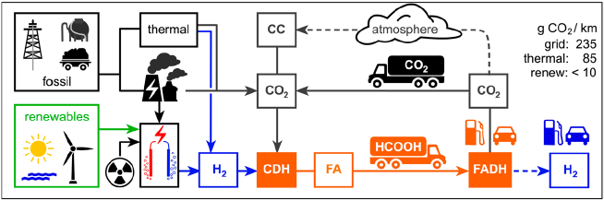
The estimated world population of 8.0 billion consumed ~15.2 Gtoe of energy (at an average rate of 20.1 TW). Globally, the burning of carbon-based fossil fuels supplies over 80% of the energy demand, and hence the prospering industrial societies are responsible for the observed increase in carbon dioxide levels from preindustrial 280 ppm to over 420 ppm now. The constantly increasing atmospheric CO2 concentration is highly likely to result in global warming, sea level rise, and ocean acidification. To reduce the environmental footprint of modern societies and address the limitations of fossil resources, the projected increase in global energy demand must go along with implementing low-carbon energy production and carrier systems. In this presentation, the current energy status and future options will be discussed and compared. It will then be concluded by introducing our research efforts in utilizing formic acid as a low-carbon hydrogen/energy carrier and e-fuel.
Kuo-Wei Huang
Key References
[1] Eppinger, J.; Huang, K.-W. “Formic Acid as a Hydrogen Energy Carrier” ACS Energy Lett.2017, 2, 188-195. [2] Dutta, I.; Parsapur, R. K.; Chatterjee, S.; Hengne, A. M.; Tan, D.; Peramaiah, K.; Solling, T. I.; Nielsen, O. J.; Huang, K.-W. “The Role of Fugitive Hydrogen Emissions in Selecting Hydrogen Carriers” ACS Energy Lett. 2023, 8, 3251-3257. [3] Cai, Y.; Chatterjee, S.; Salama, K.N.; Li. J.-J.; Huang, K.-W. “Sensing fugitive hydrogen emissions.” Nat. Rev. Electr. Eng. 2024, https://doi.org/10.1038/s44287-024-00039-4 [4] Peramaiya, K.; Yi, M.; Dutta, I.; Chatterjee, S.; Zhang, H.; Lai, Z.; Huang, K.-W. “Catalyst Design and Engineering for CO2-to-Formic Acid Electrosynthesis for a Low-Carbon Economy” Adv. Mater. 2024, 36, 2404980. [5] Chatterjee, S.; Dutta, I.; Lum, Y.; Lai, Z.; Huang, K.-W. “Enabling Storage and Utilization of Low-Carbon Electricity: Power to Formic Acid” Energy Environ. Sci. 2021, 14, 1194-1246. [6] Chatterjee, S.; Huang, K.-W. “Unrealistic Energy and Materials Requirement for Direct Air Capture in Deep Mitigation Pathways” Nat. Comm. 2020, 3287. [7] Parsapur, R. K.; Chatterjee, S.; Huang, K.-W. “The Insignificant Role of Dry Reforming of Methane in CO2 Emission Relief” ACS Energy Lett. 2020, 5, 2881-2885. [8] Chatterjee, S.; Parsapur, R. K.; Huang, K.-W. “Limitations of Ammonia as a Hydrogen Energy Carrier for the Transportation Sector” ACS Energy Lett. 2021, 6, 4390-4394. [9] Dutta, I; Chatterjee, S.; Cheng, H.; Parsapur, R. K.; Liu, Z.; Li, Z.; Ye, E.; Low, J.; Lai, Z.; Kawanami, H.; Loh,X. J.; Huang, K.-W. “Formic Acid to Power towards Low-Carbon Economy” Adv. Energy Mater. 2022, 2103799. [10] IEA World Energy Outlook 2019-2024. [11] House, K. Z.; Harvey, C. F.; Aziz, M. J.; Schrag, D. P. “The Energy Penalty of Post-combustion CO2 Capture & Storage and Its Implications for Retrofitting the U.S. Installed Base” Energy Environ. Sci.2009, 2, 193–205. [12] Dowell, N. M.; Fennell, P. S.; Shah, N.; Maitland, G. C. “The Role of CO2 Capture and Utilization in Mitigating Climate Change” Nat. Clim. Chang. 2017, 7, 243–249.