
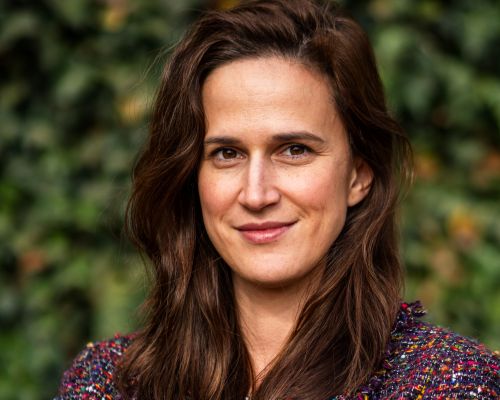
Faculty Recruiting Seminar - Anita Donlic
Jan
28
2026
The Department of Chemistry presents: Anita Donlic
Princeton University
Title: Chemical and AI-Guided Approaches to Decoding and Modulating RNA Function
Location: WEL 2.122
Refreshments served at 3:15pm
Although most of the human genome encodes non-protein-coding RNAs, how their structures and interactions generate regulatory function in cells remains poorly understood. These structure–function principles are central to uncovering how RNA misregulation drives disease and to advancing therapeutic strategies where protein-centric approaches have fallen short. Chemical biology provides the means to probe and perturb RNA function with molecular and spatiotemporal precision, but compared to proteins, RNAs lack broadly accessible strategies for selective modulation or live-cell activity readouts. This talk will present chemical, data-analytic, and imaging approaches developed to overcome these limitations.
I will begin with efforts to interrogate higher-order RNA structures using synthetic small molecules: after developing chemical probes against the MALAT1 triple helix, I used cheminformatics to uncover the molecular features that dictate binding affinity, selectivity, and functional modulation. In parallel, a curation and global analysis of a database RNA-binding ligands revealed generalizable design principles for selective recognition of diverse RNA secondary structures, providing a data-driven framework for targeting RNAs more broadly.
I will then examine biomolecular condensates, non-membrane compartments whose physical organization reflects the biochemical state of their resident RNA-driven processes. To quantitatively decode these morphological signatures, I developed Deep-Phase, an AI-powered platform that infers RNA biochemical state directly from microscopy images of condensates. I will show how Deep-Phase maps nucleolar morphology to disruptions in specific ribosome biogenesis pathways and enables scalable discovery of small molecules and interactions that modulate these processes. Together, these studies establish integrated chemical biology and AI-guided strategies for probing RNA activity across molecular and subcellular levels, ultimately paving the way for a unified framework that equips us to decode and correct RNA dysfunction in disease.